Who is an AI Ethicist? Defining a New Profession
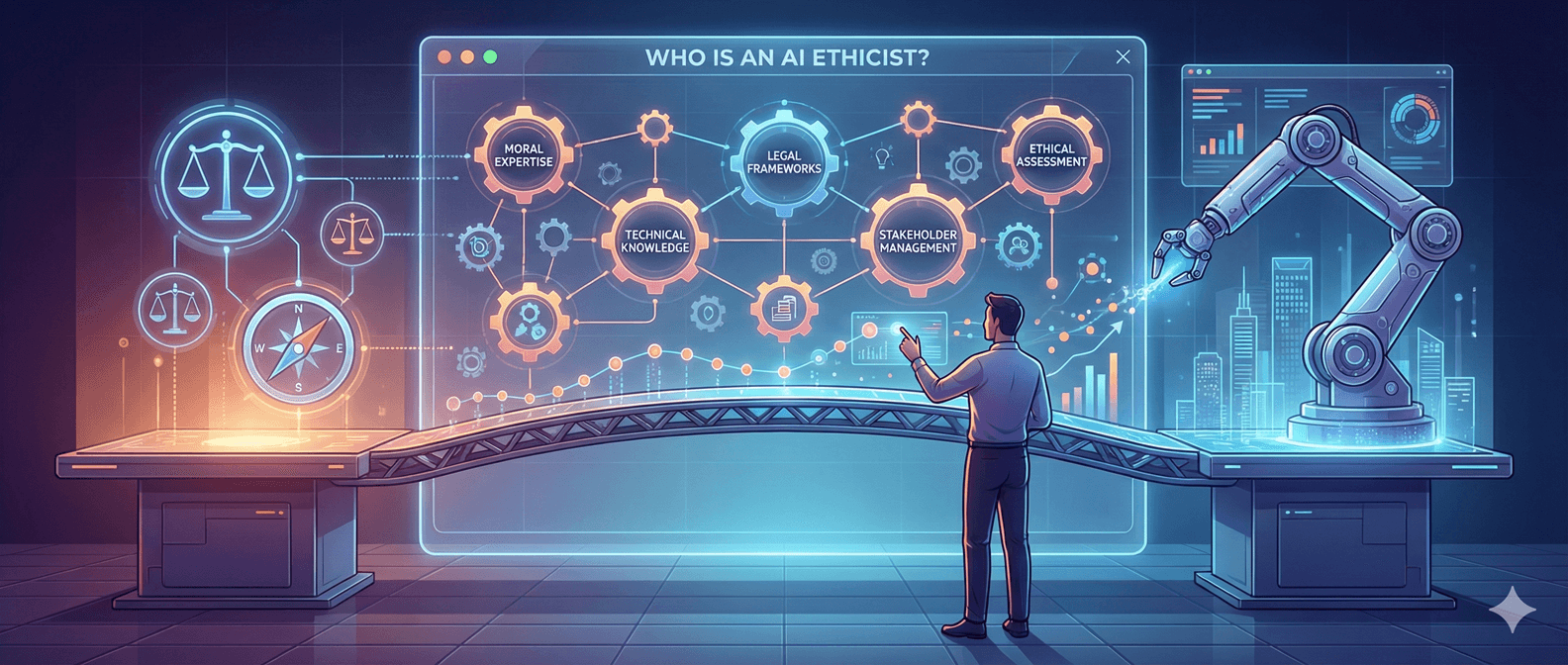
The rapid expansion of artificial intelligence has created a high demand for “AI Ethicists,” yet the professional identity of this role remains ill-defined. In the paper “Who is an AI Ethicist? An Empirical Study of Expertise, Skills, and Profiles to Build a Competency Framework,” Mariangela Zoe Cocchiaro, Luciano Floridi, and their colleagues attempt to move beyond vague principles to define the specific expertise, skills, and knowledge required for this emerging profession.
The “Identity Crisis” in AI Ethics
The authors identify a significant problem: there is currently no consensus on what an AI Ethicist actually does. This lack of professional standards leads to three major risks:
- Ineffective Practice: A gap between high-level ethical frameworks and real-world application.
- Market Credibility: Without accreditation, “responsible AI” can be dismissed as mere marketing.
- Fragmented Identity: The role is often confused with managers, engineers, or “evangelists.”
Empirical Findings
By analyzing LinkedIn data, the study found a 12% increase in professionals identifying as “AI Ethicists” or “Digital Ethicists” in Europe between 2023 and 2024, with the highest concentrations in the UK, Germany, and the Netherlands. Despite this growth, the job market remains highly varied and unregulated.
The Competency Framework: Lessons from Bioethics
To solve this, the researchers look to Healthcare (HC) Ethics Consultation—a field that spent decades standardizing its role in hospitals. They propose that an AI Ethicist should not just be a “facilitator” (as in medicine) but must also act as a researcher and educator.
Three Kinds of Moral Expertise
- Academic: Mastery of moral philosophy and normative theories.
- Performative: The personal capacity to act ethically (maintaining professional integrity).
- Practical: The ability to provide justified moral recommendations in complex, real-world scenarios.
Essential Knowledge & Skills
The paper outlines a rigorous Competency Framework that categorizes the profession into specific requirements:
The 10 Knowledge Areas
| Category | Essential Focus |
|---|---|
| K1-K2: Theory | Moral reasoning, ethical theory, and AI-specific frameworks (autonomy, justice). |
| K3-K4: Org Context | Understanding business structures and the specific local organization being advised. |
| K5: Technical | Technical awareness of ML, LLMs, statistics, and social dynamics. |
| K6-K8: Standards | Stakeholder beliefs, employer policies, and professional codes of conduct. |
| K9-K10: Law & Pedagogy | Global AI regulations (like the EU AI Act) and the ability to teach others. |
Core Skills Requirements
- Assessment: Identifying value uncertainty and accessing relevant literature.
- Process: Managing stakeholders, documenting consultations, and identifying systemic issues.
- Interpersonal: Active listening, empathy, and avoiding “radicalization” in ethical debates.
The “Anti-Evangelist” Stance
Crucially, the authors argue that an AI Ethicist must not be a technology “evangelist.”
“If AI ethicists are expected to act as evangelists for the employing organisation… their ability to assess and challenge their organisation’s practices critically may be compromised.”
The role requires independence and moral authority to identify negative impacts, even when it conflicts with an employer’s short-term financial or reputational interests.
Conclusion: The Road to Accreditation
For AI ethics to become a true profession, it needs more than just principles—it needs certified experts. The authors advocate for professional associations (similar to those for Data Protection Officers) and civil liability insurance to protect ethicists when they provide normative advice.
Ultimately, the goal is to ensure that AI development is guided by professionals who are neither “empty” of skills nor “blind” to the principles they serve.
Source
https://link.springer.com/article/10.1007/s43681-024-00643-y